
Coverage Germany
Audio Guide Sylt
app, one-time €4.99
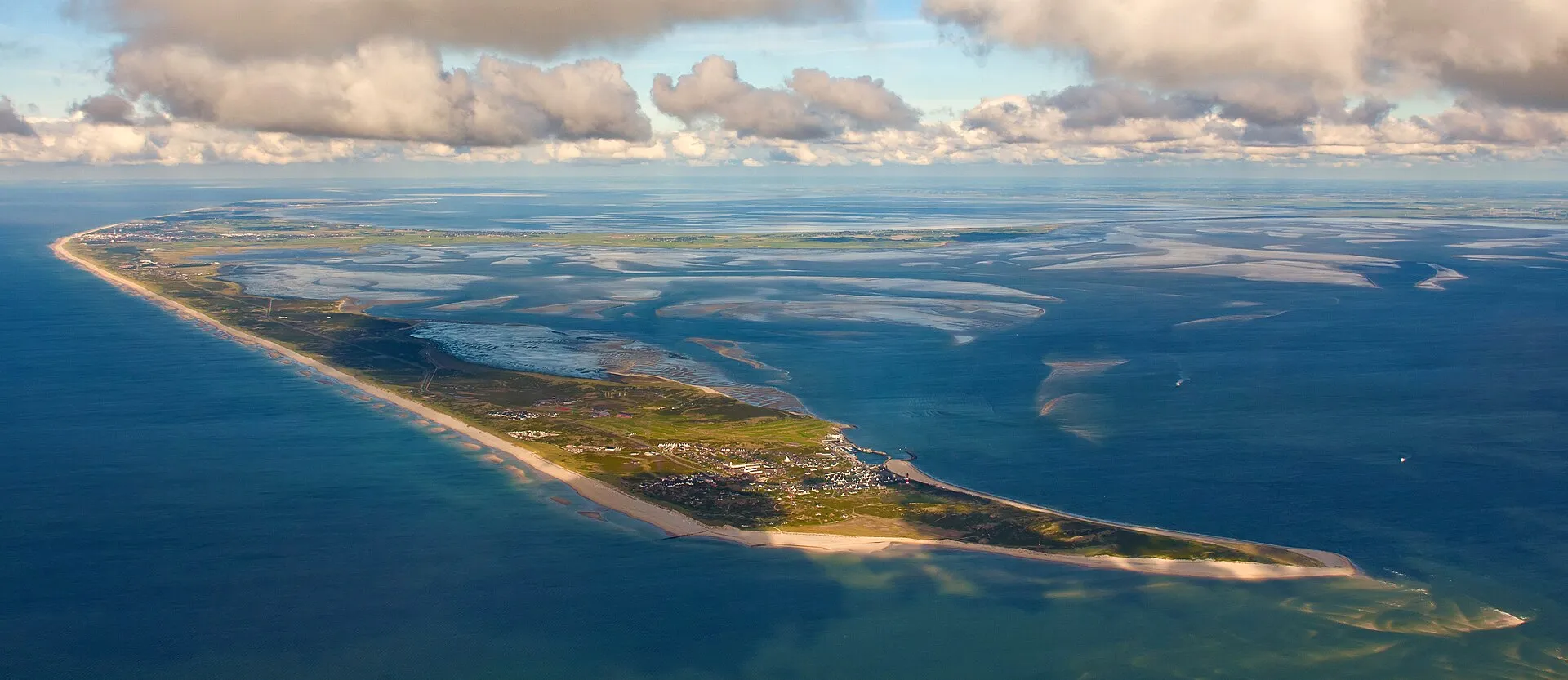
Sylt is Germany's northernmost island, a narrow sliver of North Sea coast known for wind-swept dunes, rust-red cliffs, and a stretch of beach that has drawn everyone from Frisian whalers to jet-set celebrities. The same island where a 5,000-year-old megalithic tomb sits a short walk from a lighthouse commissioned by a Danish king gives you a sense of how many layers there are to read here.
32+ researched places in the app
Yes. Parroo is a self-guided audio guide for Sylt: 32 researched places, from Kampen Lighthouse to Red Cliff and St. Severin Church, each with a short summary, a full article, and a roughly three-minute audio story in German, English, and French. Buy once, no subscription, no booking. Start whenever you like.
Audio sample: Kampen Lighthouse
Sylt
Places researched in this city
A selection of the 32 places we've researched in this city. The full set is in the Parroo app.
- Lighthouses
- Neolithic tombs
- Sea cliffs
- Wadden Sea nature
- Historic churches
- Frisian villages
-
01
Kampen Lighthouse
Commissioned in 1853 by King Frederik VII of Denmark, this 40.3-meter tower built from yellow Bornholm clinker brick was ordered when almost the entire west coast of Sylt and Jutland had no navigational light at all. It has stood on the Rotes Kliff ever since, officially renamed from 'Leuchtfeuer Rotes Kliff' to 'Leuchtturm Kampen' only in 1975.
-
02
Red Cliff
The rust-red color of this 4.5-kilometer sea cliff comes from iron oxidation in glacial boulder clay deposited during the Saale glaciation around 120,000 to 180,000 years ago, and it was already appearing on nautical charts in 1584. At up to 30 meters high, it has served as a navigational landmark for sailors for centuries.
-
03
St. Severin Church
Built on a hilltop in Keitum that was used for Germanic worship long before Christianity arrived, St. Severin is Sylt's oldest church, first documented in 1240 and featuring a tower from 1450 that sailors once used to orient themselves at sea. Its 13th-century baptismal font and late-Gothic altar survived the Reformation, which reached Sylt in 1544.
-
04
Hindenburg Dam
The 11.3-kilometer rail causeway that connects Sylt to the German mainland was built between 1923 and 1927 partly because the 1920 Schleswig plebiscite had placed the previous ferry port at Hoyerschleuse under Danish control, making a German sea crossing politically urgent. Over three million cubic meters of sand and clay went into the structure.
-
05
Wadden Sea National Park
Established in 1985 and designated a UNESCO World Heritage Site in 2009, this 4,380-square-kilometer tidal ecosystem hosts more than two million migratory birds passing through each season, along with thriving seal populations across its salt marshes, sandbanks, and mudflats.
-
06
Denghoog
The name comes from Frisian words meaning 'Thing hill,' because this Neolithic passage grave built between 3200 and 2800 BC by the Funnel Beaker Culture later served as a community assembly site long after anyone remembered why the stones were there. Its five-by-three-meter chamber, roofed by three glacial capstones, was only archaeologically examined after its discovery in 1868.
-
07
Rantum Basin
The Wehrmacht built this 576-hectare brackish water basin in 1936 and 1937 specifically as a seaplane airport, then never used it because the aircraft of the day turned out to be unsuitable for the site. By 1968 it had been declared a European bird reserve and now supports over 260 bird species on a 9-to-11-kilometer circular walking path.
-
08
25 more places to discover
In the Parroo app
Good to know
32 researched places, from the Kampen Lighthouse and St. Severin Church to lesser-known spots like the Rantum Basin, a failed Nazi seaplane airport turned bird sanctuary. Each one has a short summary, a full article, and a ~3-minute audio story.
Yes. Every place has a ~3-minute audio story, written from the perspective of a guide standing next to you and produced with premium narration, not the article read aloud.
German, English, and French. Pick whichever you'd rather read or listen in.
No booking, no signup. It's a self-guided walk you start whenever you like. You do need a connection for now to stream the audio and load articles; offline support is something we're still building.
A one-time €4.99 for the whole city, no subscription and no recurring cost. You buy Sylt once and keep access to all 32 places with text and audio.
Nearby cities
Open this city in Parroo
Get the full articles, audio stories, and map for this city in the Parroo app. One payment per geography. Yours to keep.
Updated: 2026-09-25