
Coverage Germany
Audio Guide Völklingen
app, one-time €4.99
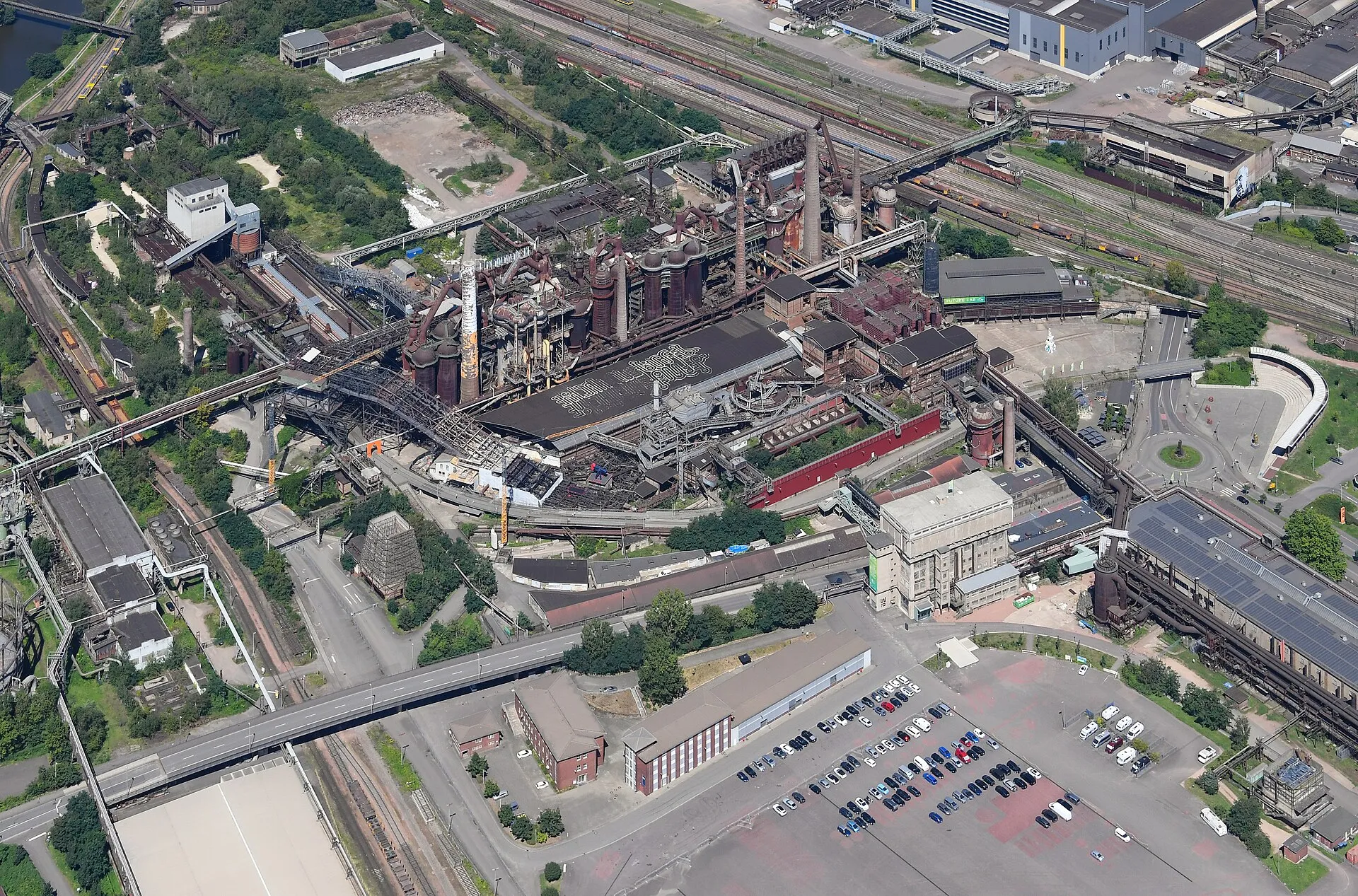
Völklingen is defined by iron and fire: its 19th-century ironworks is one of only a handful of industrial complexes ever inscribed as a UNESCO World Heritage Site, and the rust-red blast furnaces still dominate the skyline. Beyond the steelworks, the city carries layers of religious, architectural, and Huguenot history that most visitors walk straight past.
11+ researched places in the app
Yes. Parroo is a self-guided audio guide for Völklingen: 11 researched places, from Völklingen Ironworks (UNESCO) to Church of Reconciliation and Old Town Hall, each with a short summary, a full article, and a roughly three-minute audio story in German, English, and French. Buy once, no subscription, no booking. Start whenever you like.
Audio sample: Völklingen Ironworks (UNESCO)
Völklingen
Places researched in this city
A selection of the 11 places we've researched in this city. The full set is in the Parroo app.
- UNESCO ironworks
- Baroque churches
- Art Nouveau architecture
- Huguenot heritage
- Industrial landmarks
-
01
Völklingen Ironworks (UNESCO)
During World War II, over 12,000 forced laborers worked inside this complex under harsh conditions, a history the site does not hide. Founded in 1873 and shuttered in 1986, it became a UNESCO World Heritage Site in 1994 and now spans 600,000 square metres of intact blast furnaces, coking plants, and industrial architecture.
-
02
Church of Reconciliation
The steelmaker Hermann Röchling helped fund this church, built between 1926 and 1928, tying industrial money directly to the city's Protestant congregation. Its neo-Baroque tower rises 66 metres, and the interior holds a large painting by Waldemar Kolmsperger Jr.
-
03
Old Town Hall
The 45-metre tower was not part of the original plan: it was added in a 1905 expansion because the city had grown so fast that the 1875 building was already too small for its administration. The late Jugendstil and Baroque facade now houses the public library and adult education centre.
-
04
Old Train Station
The station opened in 1858 on the day the Saar railway line was inaugurated, and French artillery targeted it during the Franco-Prussian War to cut off rail supply. Restored in 1997 at a cost of 2.9 million euros, it now holds a theatre, cinema, and restaurant.
-
05
St. Eligius Church
Saint Eligius is the patron saint of metalworkers, making this the congregation literally built for ironworks employees. The 1912 church, designed by Ludwig Becker and Anton Falkowski, cost 307,000 marks to build, roughly 1.8 million euros today.
-
06
Huguenot Church
Ludweiler was founded in 1604 specifically for twelve Huguenot families fleeing religious persecution in Lorraine, and this congregation buried and rebuilt its church multiple times before the current Baroque structure went up in 1786. It is also the starting point of the Huguenot Trail linking Germany, Switzerland, and France.
-
07
Muehlgewann School
A twin building was planned alongside this 1906 Art Nouveau school, but only one was ever completed, leaving it as an unintentionally singular monument. It is considered one of the largest Art Nouveau structures in Saarland, yet it has stood empty for years while the city debates its future.
-
08
4 more places to discover
In the Parroo app
Good to know
11 researched places, from the Völklingen Ironworks and the Huguenot Church to lesser-known spots like the Muehlgewann School. Each one has a short summary, a full article, and a ~3-minute audio story.
Yes. Every place has a ~3-minute audio story, written from the perspective of a guide standing next to you and produced with premium narration, not the article read aloud.
German, English, and French. Pick whichever you'd rather read or listen in.
No booking, no signup. It's a self-guided walk you start whenever you like. You do need a connection for now to stream the audio and load articles; offline support is something we're still building.
A one-time €4.99 for the whole city, no subscription and no recurring cost. You buy Völklingen once and keep access to all 11 places with text and audio.
Nearby cities
Open this city in Parroo
Get the full articles, audio stories, and map for this city in the Parroo app. One payment per geography. Yours to keep.
Updated: 2026-09-25