
Coverage Germany
Audio Guide Duisburg
app, one-time €4.99
Duisburg sits at the confluence of the Rhine and Ruhr rivers, home to Europe's largest inland port and a post-industrial landscape that has been steadily reinvented as parkland, public art, and cultural venues. The former Thyssen ironworks, now Landschaftspark Duisburg-Nord, lets visitors climb blast furnaces and scuba dive in old gasometers. Cartographer Gerardus Mercator, who gave the world its standard navigational map projection, lived and died here, and his presence is woven into the city's streets and squares.
39+ researched places in the app
Yes. Parroo is a self-guided audio guide for Duisburg: 39 researched places, from Landscape Park Duisburg-Nord to Salvator Church and Küppersmühle Museum for Modern Art, each with a short summary, a full article, and a roughly three-minute audio story in German, English, and French. Buy once, no subscription, no booking. Start whenever you like.
Audio sample: Landscape Park Duisburg-Nord
Duisburg
Places researched in this city
A selection of the 39 places we've researched in this city. The full set is in the Parroo app.
- Industrial heritage parks
- Medieval fortifications
- Sculpture trails
- Gothic churches
- Modern art museums
- Riverside landscapes
-
01
Landscape Park Duisburg-Nord
Old blast furnaces double as climbing walls and a former gas tank now serves as one of Europe's largest inland dive centres: the Thyssen Ironworks site, closed in 1985 after producing around 37 million tons of pig iron, was redesigned by Peter Latz from 1991 into a 180-hectare public park that keeps every industrial structure in place.
-
02
Salvator Church
The tomb of Gerardus Mercator, the cartographer who invented the projection still used on maps today, lies inside this late Gothic church, which itself stands on the site of a Frankish royal palace dating to around 800 AD.
-
03
Küppersmühle Museum for Modern Art
Herzog and de Meuron converted a 19th-century grain mill into this museum in 1999, then extended it in 2021 by integrating the original 42-metre steel silos into the gallery spaces, creating one of the most visually distinctive exhibition buildings in the Ruhr.
-
04
Duisburg Inner Harbor
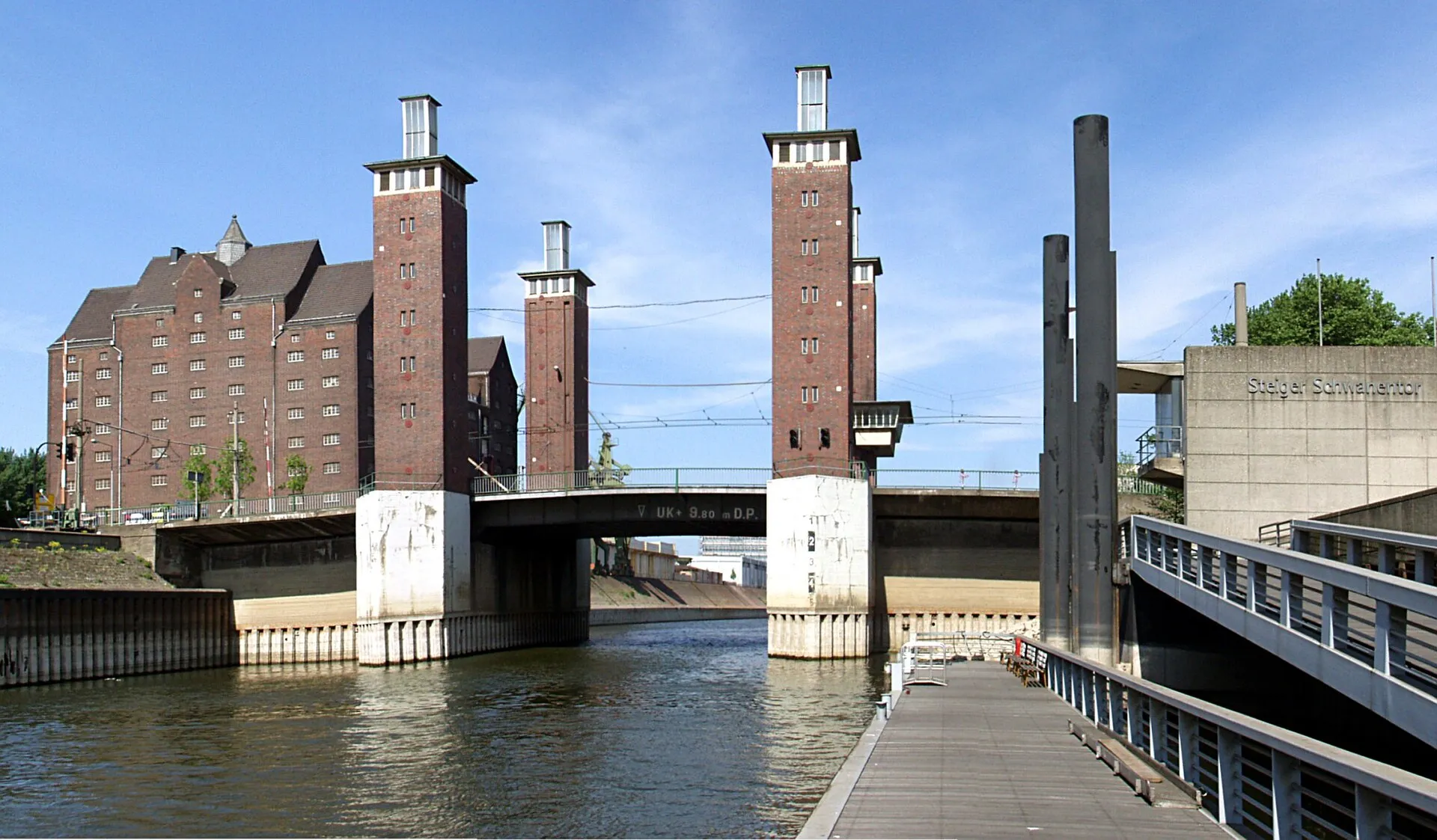
Once called the breadbasket of the Ruhr for its vast grain-milling operations, this 89-hectare harbour fell largely idle after the 1960s before Sir Norman Foster led its transformation in the 1990s into a mixed district of museums, restaurants, and open water.
-
05
Tiger and Turtle: Magic Mountain
You can walk the entire 220-metre track of this sculpture by Heike Mutter and Ulrich Genth, which looks exactly like a roller coaster but moves at the pace of a stroll; the one loop in the circuit is the only section visitors cannot walk, making the illusion stranger the closer you get.
-
06
Old City Wall
Duisburg's surviving 670 metres of medieval stonework is considered the oldest extensively preserved post-Roman city wall in Germany, with parts of the construction material dating to the 10th century, long before the main building phases of the 12th to 14th centuries.
-
07
Rhine Orange
Lutz Fritsch's 25-metre, 83-tonne steel sculpture, painted in RAL 2004 pure orange, marks the exact point where the Ruhr meets the Rhine and was funded entirely by local donations at a cost of over 400,000 Deutsche Mark when it was erected in 1992.
-
08
32 more places to discover
In the Parroo app
Good to know
39 researched places, from the Landscape Park Duisburg-Nord and the Salvator Church to lesser-known spots like the Rhine Orange. Each one has a short summary, a full article, and a ~3-minute audio story.
Yes. Every place has a ~3-minute audio story, written from the perspective of a guide standing next to you and produced with premium narration, not the article read aloud.
German, English, and French. Pick whichever you'd rather read or listen in.
No booking, no signup. It's a self-guided walk you start whenever you like. You do need a connection for now to stream the audio and load articles; offline support is something we're still building.
A one-time €4.99 for the whole city, no subscription and no recurring cost. You buy Duisburg once and keep access to all 39 places with text and audio.
Open this city in Parroo
Get the full articles, audio stories, and map for this city in the Parroo app. One payment per geography. Yours to keep.
Updated: 2026-09-25