
Coverage Germany
Audio Guide Cottbus
app, one-time €4.99
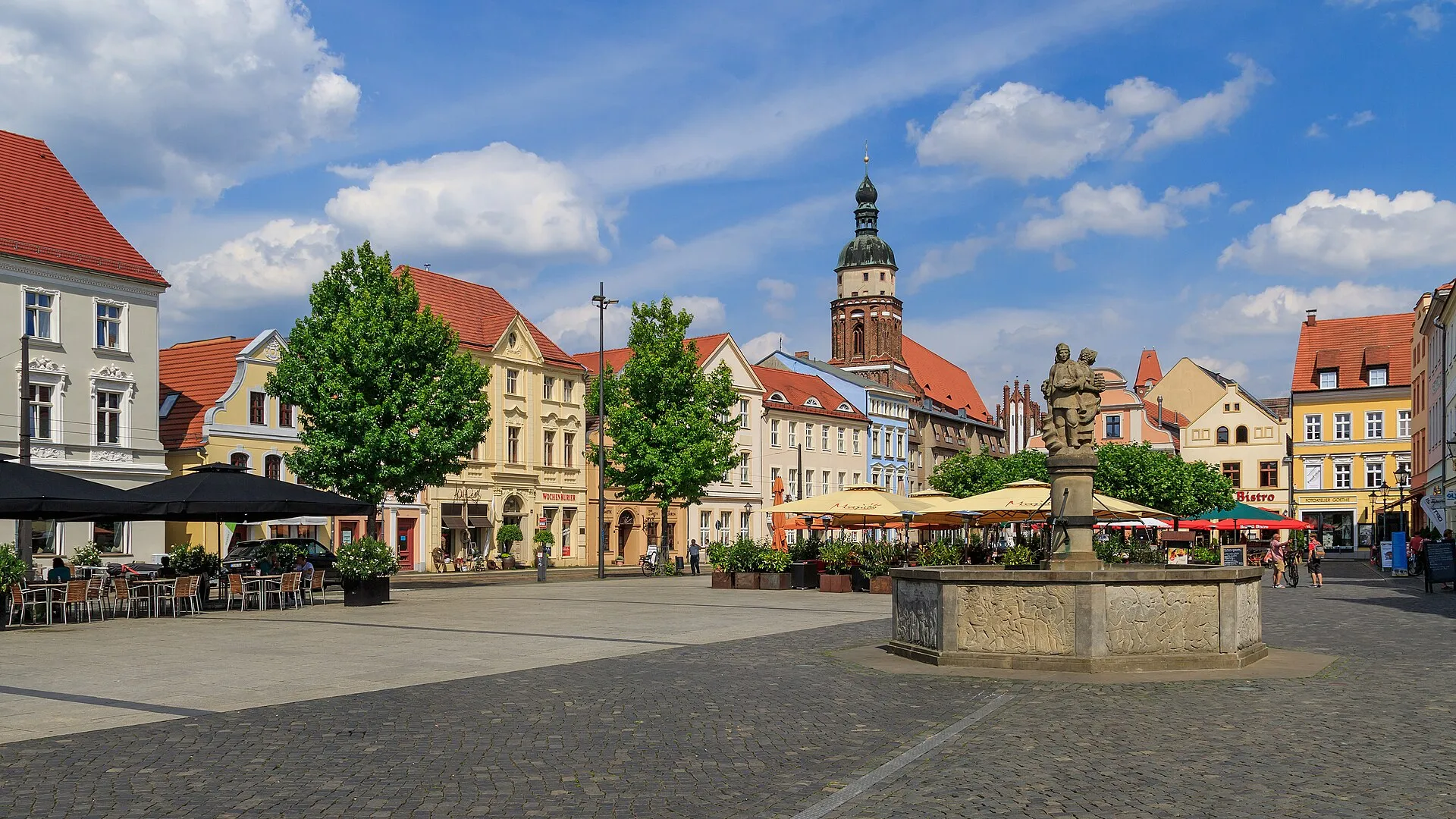
Cottbus is a Sorbian-German city on the Spree river, shaped by medieval fortifications, Baroque parks, and a lignite-mining past now being turned into Germany's largest artificial lake. The eccentric Prince Pückler-Muskau is buried inside a water pyramid in his own landscaped park right on the edge of the city.
25+ researched places in the app
Yes. Parroo is a self-guided audio guide for Cottbus: 25 researched places, from Branitz Castle to Spremberg Tower and Upper Church St. Nikolai, each with a short summary, a full article, and a roughly three-minute audio story in German, English, and French. Buy once, no subscription, no booking. Start whenever you like.
Audio sample: Branitz Castle
Cottbus
Places researched in this city
A selection of the 25 places we've researched in this city. The full set is in the Parroo app.
- Medieval towers
- Baroque palace and park
- Gothic churches
- Art Nouveau theatre
- Industrial heritage
-
01
Branitz Castle
Prince Hermann von Pückler-Muskau had himself entombed in a pyramid rising out of a lake inside his own park, a final flourish from the man who reshaped this 622-hectare estate from 1845 into one of the great 19th-century English-style gardens in Germany. The Baroque palace at its heart blends European and Oriental design and still holds the prince's library.
-
02
Spremberg Tower
Karl Friedrich Schinkel added the crenellated crown between 1823 and 1825, giving this 13th-century gate tower its distinctive silhouette, though the tower's real test came in 1429 when it successfully held off a Hussite attack. At 31 metres, its viewing platform still looks out over the old town.
-
03
Upper Church St. Nikolai
First mentioned in 1156, the largest medieval church in Lower Lusatia burned in 1486 and was rebuilt in late Gothic brick, with its 55-metre tower becoming the dominant landmark of Cottbus's skyline. It turned Protestant in 1537 and today is part of the international Cross of Nails community.
-
04
State Theatre Cottbus
Architect Bernhard Sehring, who also designed Berlin's Theater des Westens, built this Art Nouveau theatre on a former cattle market and opened it in 1908 with a performance of Lessing's Minna von Barnhelm. It survived World War II intact and was designated a state theatre in 1992.
-
05
Cottbus Eastern Lake
The name is a deliberate pun: Ostsee means Baltic Sea in German, and the city chose it partly because this new 19-square-kilometre lake sits east of Cottbus. Flooding of the former Cottbus-Nord lignite mine began in April 2019 and the lake is expected to reach its target level around 2025, becoming Germany's largest artificial lake.
-
06
Mint Tower
Cottbus was granted the right to mint its own coins in 1483, producing the Cottbuser Heller bearing the city's heraldic crayfish, and this 15th-century tower at the northeastern corner of the medieval city wall is the oldest surviving tower in the city. At nearly 48 metres, it also happens to be the tallest.
-
07
Cottbus Post Coachman Monument
This 2006 bronze sculpture near the Linden Gate is also the subject of one of the most famous German tongue twisters, originating in the mid-19th century and later used in the GDR as a speech exercise for aspiring radio presenters. The monument was funded by donations and unveiled for the city's 850th anniversary.
-
08
18 more places to discover
In the Parroo app
Good to know
25 researched places, from Branitz Castle and the Spremberg Tower to lesser-known spots like the Mint Tower. Each one has a short summary, a full article, and a ~3-minute audio story.
Yes. Every place has a ~3-minute audio story, written from the perspective of a guide standing next to you and produced with premium narration, not the article read aloud.
German, English, and French. Pick whichever you'd rather read or listen in.
No booking, no signup. It's a self-guided walk you start whenever you like. You do need a connection for now to stream the audio and load articles; offline support is something we're still building.
A one-time €4.99 for the whole city, no subscription and no recurring cost. You buy Cottbus once and keep access to all 25 places with text and audio.
Nearby cities
Open this city in Parroo
Get the full articles, audio stories, and map for this city in the Parroo app. One payment per geography. Yours to keep.
Updated: 2026-09-25