
Coverage France
Audio Guide Quimper
app, one-time €4.99
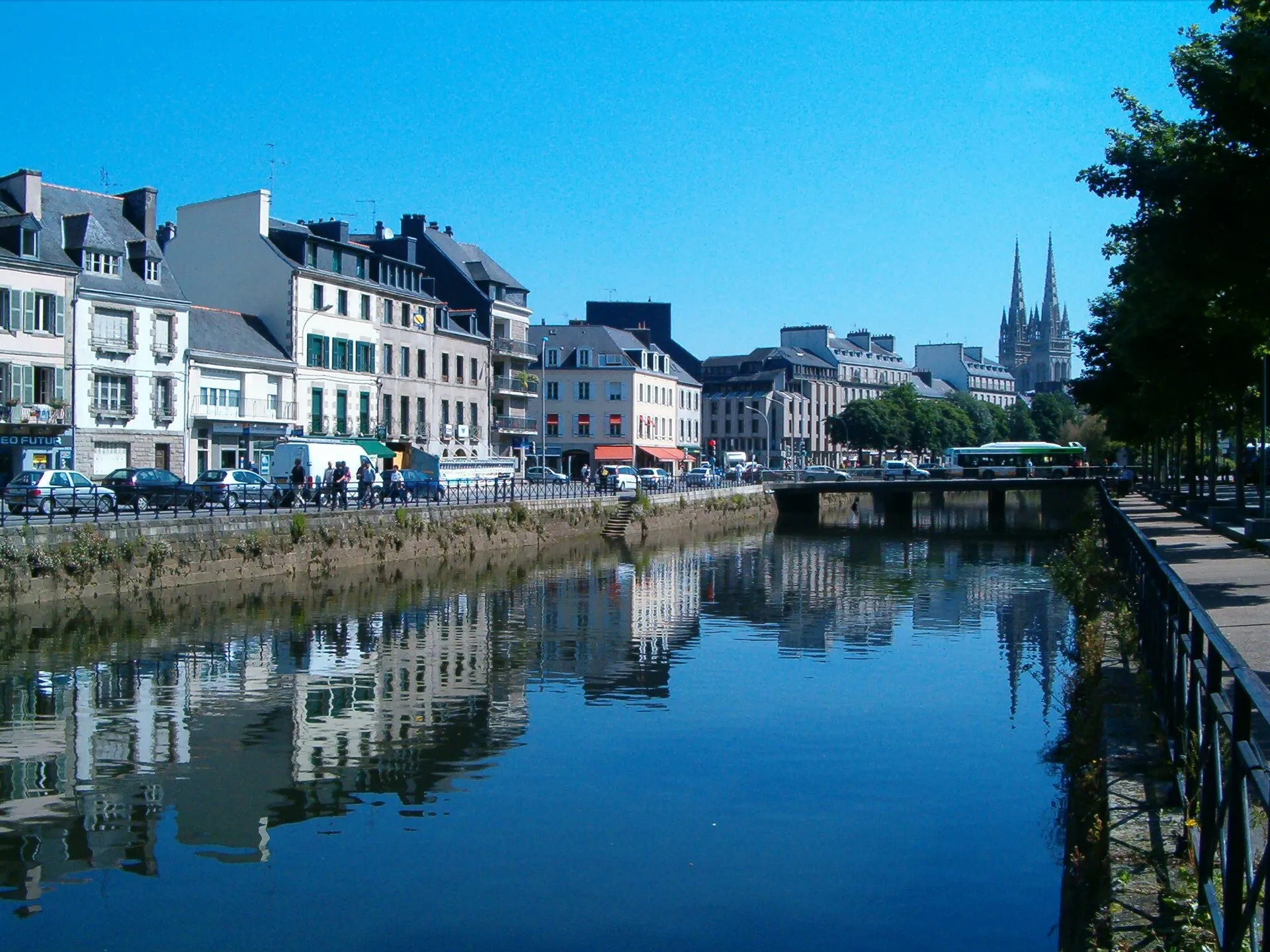
Quimper is the ancient capital of Cornouaille, where the Breton language, faience pottery tradition and Gothic architecture converge at the confluence of two rivers. The name itself comes from the Breton word for confluence, and the city's cathedral nave is famously bent to symbolise the inclined head of Christ. From medieval cobbled lanes to a 11th-century Romanesque church, Quimper rewards those who look closely.
30+ researched places in the app
Parroo is a self-guided audio guide for Quimper: 30 researched places, from Saint-Corentin Cathedral to the old town and the faience workshop in Locmaria, each with a short summary, a full article, and a roughly three-minute audio story in German, English, and French. Buy once, no subscription, no booking. Start whenever you like.
Audio sample: Saint-Corentin Cathedral
Quimper
Places researched in this city
A selection of the 30 places we've researched in this city. The full set is in the Parroo app.
- Gothic cathedral
- Medieval streets
- Romanesque church
- Hilltop nature
- Faience heritage
- Historic squares
-
01
Saint-Corentin Cathedral
The nave of this cathedral is not straight: it bends deliberately to represent Christ's inclined head, a rare architectural symbolism in France. Construction began in 1239 and the two neo-Gothic spires were only added between 1854 and 1856, funded by the city's own inhabitants.
-
02
Old Quimper
A fire in 1746 reshaped much of what you see today, yet half-timbered houses and cobbled lanes survive intact around the cathedral quarter. Quimper has maintained a faience pottery tradition here since 1708, and the annual Festival of Cornouaille fills these streets each summer.
-
03
Church of Our Lady of Locmaria
This is the oldest religious building in Quimper, built in the 11th century on a site where port activity had already existed since antiquity. Its austere Romanesque interior was originally the abbey church of a Benedictine nunnery before becoming a priory in 1124.
-
04
Mount Frugy
During the French Revolution, Quimper was briefly renamed Montagne-sur-Odet in direct reference to this 70-metre granite hill. Evidence of human occupation here stretches back to the Neolithic, and a Gallo-Roman necropolis once spread across its wooded flanks.
-
05
Henriot-Quimper Pottery
A potter from Marseille founded this faience workshop in 1690 by settling next to the Locmaria priory, choosing the spot specifically for its easy river access. The manufactory is still producing hand-painted Breton faience today and holds the label of Living Heritage Company.
-
06
Butter Square
The square's full original name was Place au Beurre-de-Pot, because the market here specialised in very salty winter butter preserved in stoneware pots. A printer named Guillaume Leblanc was operating on this square as early as 1683, producing religious works partly in the Breton language for the nearby Jesuit College.
-
07
Max-Jacob Theater
The plot this theatre stands on was originally bequeathed to Quimper for a retirement home; the city chose to build a theatre instead, triggering legal disputes settled only by presidential decree in 1899. In 1942, the brother of the poet Max Jacob was arrested in the theatre's own garden because of his Jewish heritage and later died in Auschwitz.
-
08
23 more places to discover
In the Parroo app
Good to know
30 researched places, from the Saint-Corentin Cathedral and the Church of Our Lady of Locmaria to lesser-known spots like Butter Square. Each one has a short summary, a full article, and a ~3-minute audio story.
Yes. Every place has a ~3-minute audio story, written from the perspective of a guide standing next to you and produced with premium narration, not the article read aloud.
German, English, and French. Pick whichever you'd rather read or listen in.
No booking, no signup. It's a self-guided walk you start whenever you like. You do need a connection for now to stream the audio and load articles; offline support is something we're still building.
A one-time €4.99 for the whole city, no subscription and no recurring cost. You buy Quimper once and keep access to all 30 places with text and audio.
Nearby cities
Other audio guides and tours here
Parroo isn't the only option. Here are honest local alternatives so you can compare for yourself.
- Office de Tourisme Quimper Cornouaille (izi.travel) · Free audio guide (izi.travel). Three official free GPS audio routes from the Maison du Patrimoine in the izi.travel app.
- Office de Tourisme Quimper Cornouaille · Guided tour / printed circuits. Guided visits and printed self-guided circuits via the tourist office.
Open this city in Parroo
Get the full articles, audio stories, and map for this city in the Parroo app. One payment per geography. Yours to keep.
Updated: 2026-09-17