
Coverage France
Audio Guide Besancon
app, one-time €4.99
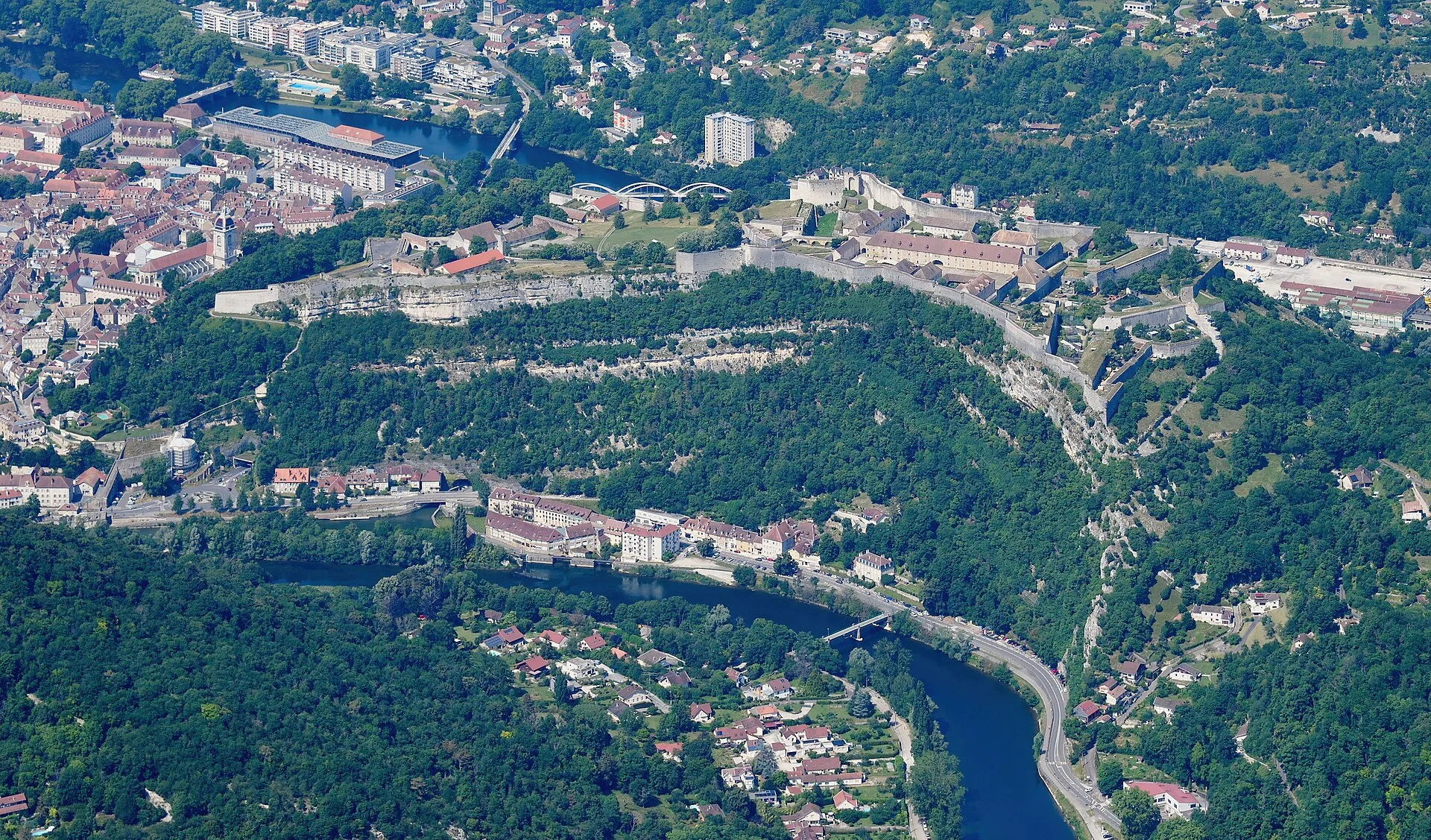
Besançon sits inside a near-perfect horseshoe bend of the Doubs River, a natural fortress that Julius Caesar noted in 58 BC and Vauban turned into one of France's most formidable citadels centuries later. The city shaped European timekeeping, gave the world Victor Hugo, and still wears its Roman, Renaissance, and Enlightenment layers openly in its streets.
33+ researched places in the app
Yes. Parroo is a self-guided audio guide for Besancon: 33 researched places, from The Citadel to Saint John Cathedral and Museum of Time (Granvelle Palace), each with a short summary, a full article, and a roughly three-minute audio story in German, English, and French. Buy once, no subscription, no booking. Start whenever you like.
Audio sample: The Citadel
Besancon
Places researched in this city
A selection of the 33 places we've researched in this city. The full set is in the Parroo app.
- Roman arch
- Vauban citadel
- Renaissance palace
- Astronomical clock
- Riverside promenade
- Birthplace museum
-
01
The Citadel
Julius Caesar identified this hilltop as strategically vital in 58 BC, and Vauban turned it into an 11-hectare masterpiece of bastioned architecture between 1668 and 1683. Today a UNESCO World Heritage Site, it draws over 250,000 visitors a year and houses three museums within its limestone walls.
-
02
Saint John Cathedral
Inside this cathedral, whose two opposing apses face each other across the nave, a 19th-century clock built by Auguste-Lucien Vérité uses more than 30,000 parts and 11 separate movements to track planetary positions, tides, and the calendar. The building itself layers Romanesque, Gothic, Renaissance, and Baroque styles accumulated between the 11th and 18th centuries.
-
03
Museum of Time (Granvelle Palace)
The Chancellor of Emperor Charles V built this Renaissance palace between 1532 and 1542, and Louis XIV later stayed here with the Queen and the Dauphin in 1683. Since 2002 it has housed around 1,500 watches and clocks that trace Besançon's role as the centre of French horology.
-
04
Black Gate
Built between 171 and 175 AD under Marcus Aurelius, this 16.56-metre Roman triumphal arch once stood at the southern end of the main street of ancient Vesontio. Its limestone faces are carved with mythological scenes, and it was only classified as a historical monument in 1840 after centuries of serving as an actual city gate.
-
05
Museum of Fine Arts and Archaeology
France's oldest public museum opened in 1694 from a single donation by Abbot Boisot, nearly a century before the Louvre went public. Installed inside a former grain hall redesigned with a concrete interior structure, its collection includes works by Bellini, Titian, and Courbet.
-
06
Osselle Cave
Open to visitors since 1504, this cave near Besançon is one of the oldest tourist sites in Europe and also its largest known necropolis of cave bears. In the 18th century it hosted banquets for regional dignitaries, and philosopher Voltaire reportedly attended several times.
-
07
Victor Hugo House
The ground floor of this 1754 building on Grande-Rue was an apothecary when Victor Hugo was born here on 26 February 1802, and the site itself sits atop an ancient Roman capitol. When the city opened it as a museum in 2013, the focus was placed on Hugo's political and humanitarian work rather than just his literary fame.
-
08
26 more places to discover
In the Parroo app
Good to know
33 researched places, from the Citadel and the Black Gate to lesser-known spots like the Osselle Cave. Each one has a short summary, a full article, and a ~3-minute audio story.
Yes. Every place has a ~3-minute audio story, written from the perspective of a guide standing next to you and produced with premium narration, not the article read aloud.
German, English, and French. Pick whichever you'd rather read or listen in.
No booking, no signup. It's a self-guided walk you start whenever you like. You do need a connection for now to stream the audio and load articles; offline support is something we're still building.
A one-time €4.99 for the whole city, no subscription and no recurring cost. You buy Besancon once and keep access to all 33 places with text and audio.
Open this city in Parroo
Get the full articles, audio stories, and map for this city in the Parroo app. One payment per geography. Yours to keep.
Updated: 2026-09-25