
Coverage France
Audio Guide Dijon
app, one-time €4.99
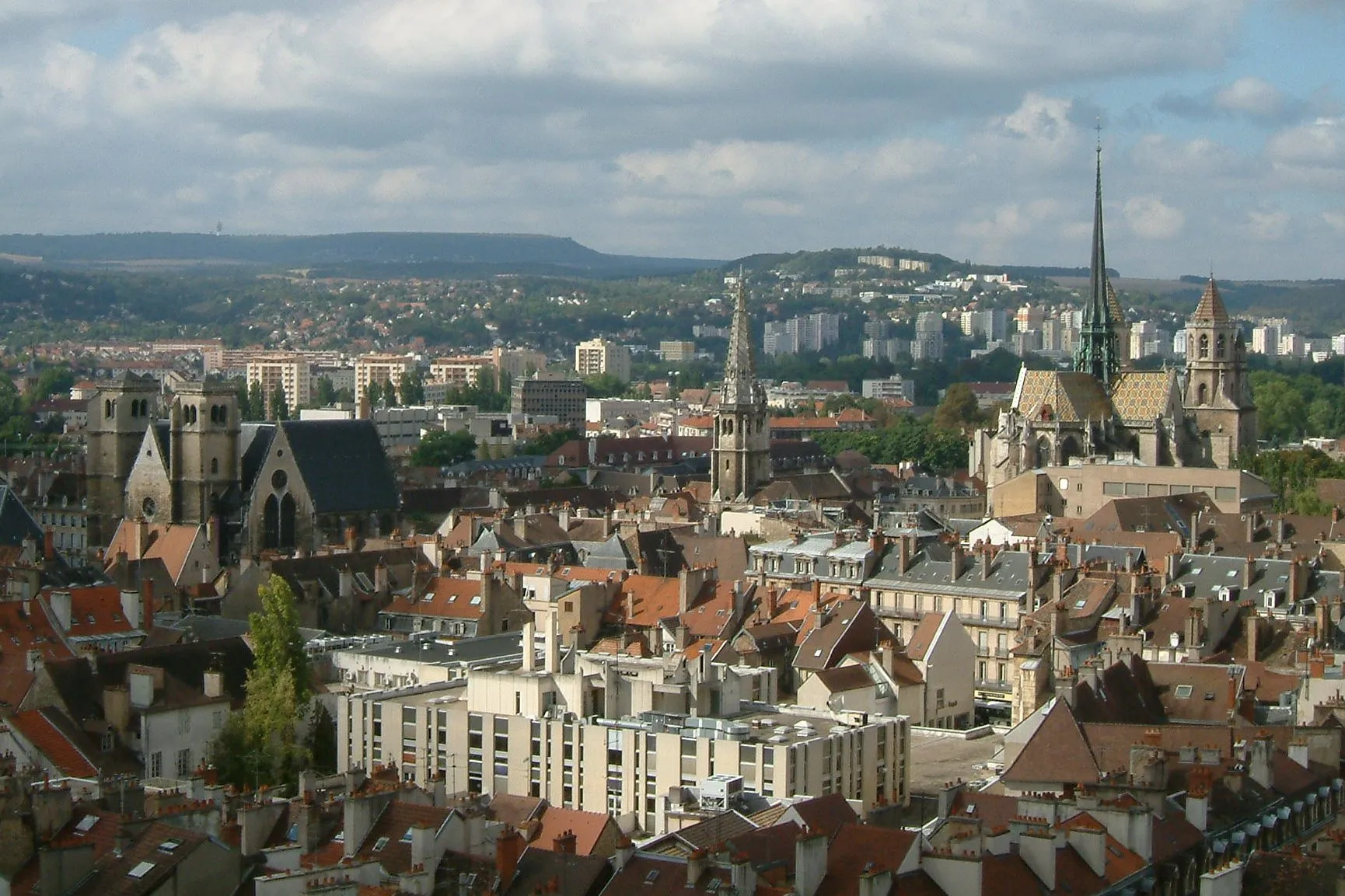
Dijon is the historic capital of Burgundy, a city where Gothic towers, medieval streets, and world-famous mustard share equal billing with some of Europe's finest Burgundy wines. The Palace of the Dukes of Burgundy anchors a compact old town that UNESCO has recognised as a heritage area, and a 13th-century church still draws visitors who stroke a small stone owl for good luck.
32+ researched places in the app
Yes. Parroo is a self-guided audio guide for Dijon: 32 researched places, from Palace of the Dukes and Estates of Burgundy to Church of Our Lady (Église Notre-Dame) and Saint-Bénigne Cathedral, each with a short summary, a full article, and a roughly three-minute audio story in German, English, and French. Buy once, no subscription, no booking. Start whenever you like.
Audio sample: Palace of the Dukes and Estates of Burgundy
Dijon
Places researched in this city
A selection of the 32 places we've researched in this city. The full set is in the Parroo app.
- Gothic churches
- Ducal palace
- Medieval streets
- Sculpted monuments
- Historic gardens
- Market halls
-
01
Palace of the Dukes and Estates of Burgundy
Once the seat of the powerful Valois Dukes of Burgundy, this complex grew from a 3rd-century Roman fort into a Gothic and classical palace redesigned by Louis XIV's chief architect Jules Hardouin-Mansart. Today it doubles as Dijon's city hall and houses the Museum of Fine Arts.
-
02
Church of Our Lady (Église Notre-Dame)
In 1383, Philip the Bold hauled a clock and its automaton figure back from Kortrijk as war booty and installed it on this 13th-century church's facade, where it still strikes the hours today. The church also shelters a small 15th-century owl sculpture that locals rub for good luck, giving the city its unofficial mascot.
-
03
Saint-Bénigne Cathedral
Built between 1280 and 1393 on a site of Christian worship dating to the 6th century, this Gothic cathedral rises to a 93-metre spire above a Burgundian glazed-tile roof. Its crypt, dating to around the year 1000, is considered one of the oldest in France.
-
04
Well of Moses (Chartreuse de Champmol)
Carved by Dutch sculptor Claus Sluter between 1395 and 1405, this hexagonal limestone monument once stood nearly 7 metres tall and was originally painted in vivid polychrome with gilded details. It marked a turning point in medieval sculpture, shifting from the International Gothic style toward genuine realism.
-
05
The Halls of Dijon (Les Halles)
Covering 4,400 square metres, this iron-and-glass market hall was built between 1873 and 1875 on the site of a demolished 13th-century Jacobins convent. Its vine-motif columns are a nod to the Burgundy that fills the stalls every market day.
-
06
Église Saint-Philibert
Dijon's oldest surviving church, built in the mid-12th century, was the parish of the city's winemakers and the very spot where Duke Hugh III handed Dijon its municipal charter in 1187 on its porch. It has stood largely unused since the Revolution, giving it a rare, unrestored Romanesque atmosphere.
-
07
Jardin Darcy
This neo-Renaissance garden, opened in 1880, was built directly on top of a cylindrical water reservoir engineered by Henry Darcy between 1838 and 1840, part of a system that made Dijon one of the first cities outside Rome to have a modern drinking-water supply. The garden sits above 2,300 cubic metres of water and has been a listed historical monument since 2015.
-
08
25 more places to discover
In the Parroo app
Good to know
32 researched places, from the Palace of the Dukes and Estates of Burgundy and Saint-Bénigne Cathedral to lesser-known spots like Église Saint-Philibert. Each one has a short summary, a full article, and a ~3-minute audio story.
Yes. Every place has a ~3-minute audio story, written from the perspective of a guide standing next to you and produced with premium narration, not the article read aloud.
German, English, and French. Pick whichever you'd rather read or listen in.
No booking, no signup. It's a self-guided walk you start whenever you like. You do need a connection for now to stream the audio and load articles; offline support is something we're still building.
A one-time €4.99 for the whole city, no subscription and no recurring cost. You buy Dijon once and keep access to all 32 places with text and audio.
Open this city in Parroo
Get the full articles, audio stories, and map for this city in the Parroo app. One payment per geography. Yours to keep.
Updated: 2026-09-25