
Coverage Germany
Audio Guide Baden-Baden
app, one-time €4.99
Baden-Baden built its reputation on thermal springs and old money: Roman legions bathed here, 19th-century aristocrats gambled here, and Brahms composed two symphonies in a farmhouse attic here. The result is a compact spa town where a Neoclassical casino sits next to 2,000-year-old Roman ruins and a concert hall converted from a railway station.
33+ researched places in the app
Yes. Parroo is a self-guided audio guide for Baden-Baden: 33 researched places, from Spa House (Kurhaus) to Friedrichsbad and Collegiate Church (Stiftskirche), each with a short summary, a full article, and a roughly three-minute audio story in German, English, and French. Buy once, no subscription, no booking. Start whenever you like.
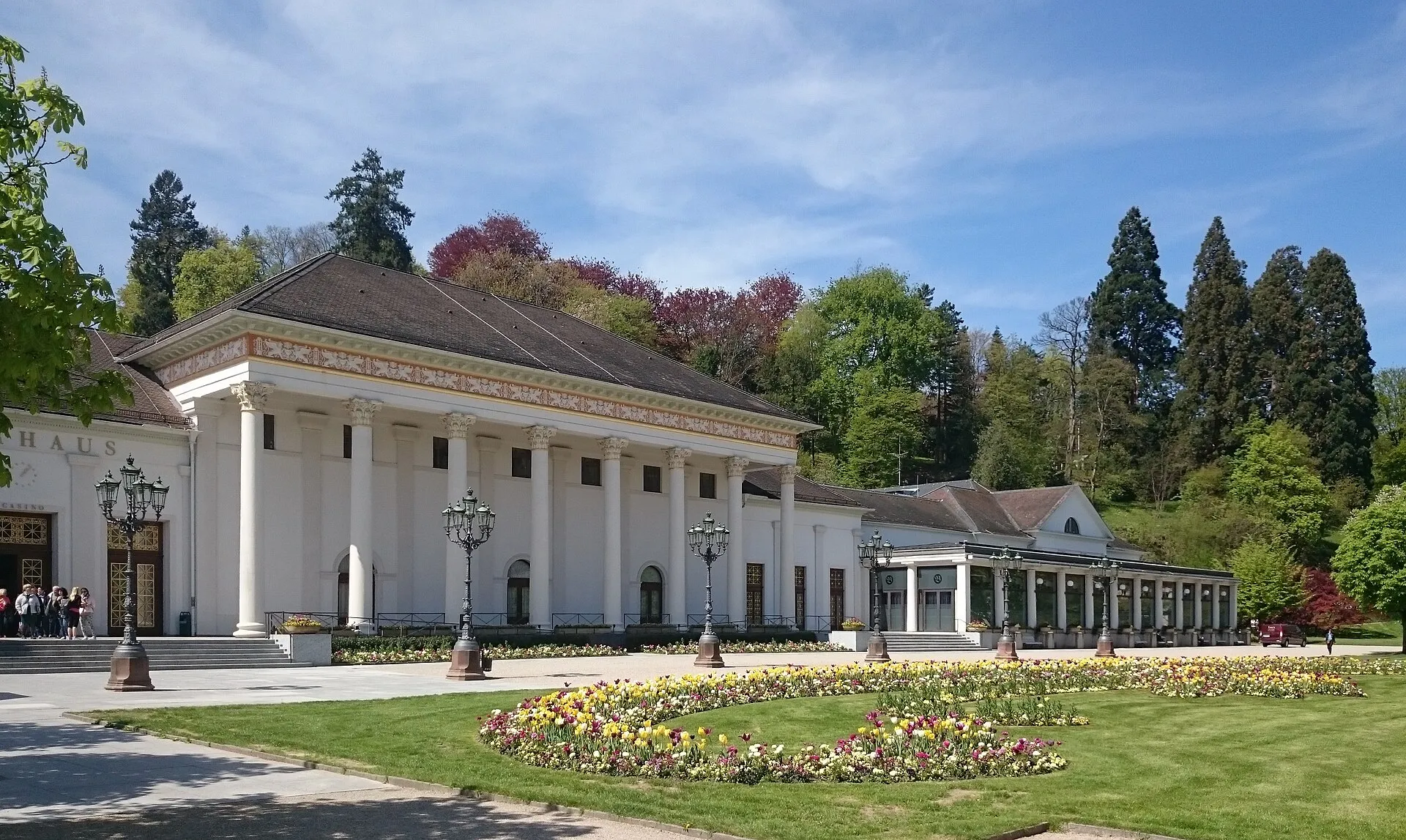
Audio sample: Spa House (Kurhaus)
Baden-Baden
Places researched in this city
A selection of the 33 places we've researched in this city. The full set is in the Parroo app.
- Thermal baths
- Neoclassical landmarks
- Medieval castles
- Natural Black Forest
- Concert halls
- Roman ruins
-
01
Spa House (Kurhaus)
Dostoyevsky reportedly lost a fortune at the tables inside, an experience that fed directly into his novel 'The Gambler'. Friedrich Weinbrenner's Neoclassical centrepiece, completed in 1824, remains the social and architectural heart of the city.
-
02
Friedrichsbad
Goethe's name is carved on the facade, and the building itself was constructed partly on top of Roman bath ruins discovered during excavation. Built between 1869 and 1877 after a gambling ban threatened the city's income, it guides bathers through a 17-step Roman-Irish bathing ritual beneath a 17-metre dome.
-
03
Collegiate Church (Stiftskirche)
Baden-Baden's oldest continuously used building, first documented in 987, was itself built on top of Roman thermal baths, a sudatorium was found beneath the floor during excavations. The 68-metre tower and a 1467 sandstone crucifix mark it from across the city centre.
-
04
Roman Bath Ruins
The two bath complexes here, the lavish Kaiserbäder and the plainer Soldatenbäder, were already drawing visitors nearly 2,000 years ago, with the imperial baths expanded under Emperor Caracalla between 213 and 217 AD. The hypocaust underfloor heating system they used is still visible today.
-
05
Lichtentaler Avenue
What began in 1655 as a simple path to a monastery was reshaped between 1850 and 1870 into one of Europe's most celebrated promenades, lined with over 300 tree and shrub species. Clara Schumann and Brahms both walked it regularly during Baden-Baden's era as the so-called Summer Capital of Europe.
-
06
Yburg
In the 16th century this hilltop ruin gained a dubious reputation when alchemists worked here on behalf of Margrave Eduard Fortunat, reportedly attempting to produce gold. Built around 1200 and destroyed in 1689, it still offers sweeping views over the Rhine Valley.
-
07
Brahms House
Brahms composed his First and Second Symphonies in the attic of a farmhouse built in 1790, returning every summer from 1865 to 1876 on the recommendation of his close friend Clara Schumann. The house was restored by the Brahms Society in 1967 and is now a small museum in the Lichtental district.
-
08
26 more places to discover
In the Parroo app
Good to know
33 researched places, from the Kurhaus and the Friedrichsbad to lesser-known spots like the Brahms House. Each one has a short summary, a full article, and a ~3-minute audio story.
Yes. Every place has a ~3-minute audio story, written from the perspective of a guide standing next to you and produced with premium narration, not the article read aloud.
German, English, and French. Pick whichever you'd rather read or listen in.
No booking, no signup. It's a self-guided walk you start whenever you like. You do need a connection for now to stream the audio and load articles; offline support is something we're still building.
A one-time €4.99 for the whole city, no subscription and no recurring cost. You buy Baden-Baden once and keep access to all 33 places with text and audio.
Open this city in Parroo
Get the full articles, audio stories, and map for this city in the Parroo app. One payment per geography. Yours to keep.
Updated: 2026-09-25