
Coverage France
Audio Guide Fontainebleau
app, one-time €4.99
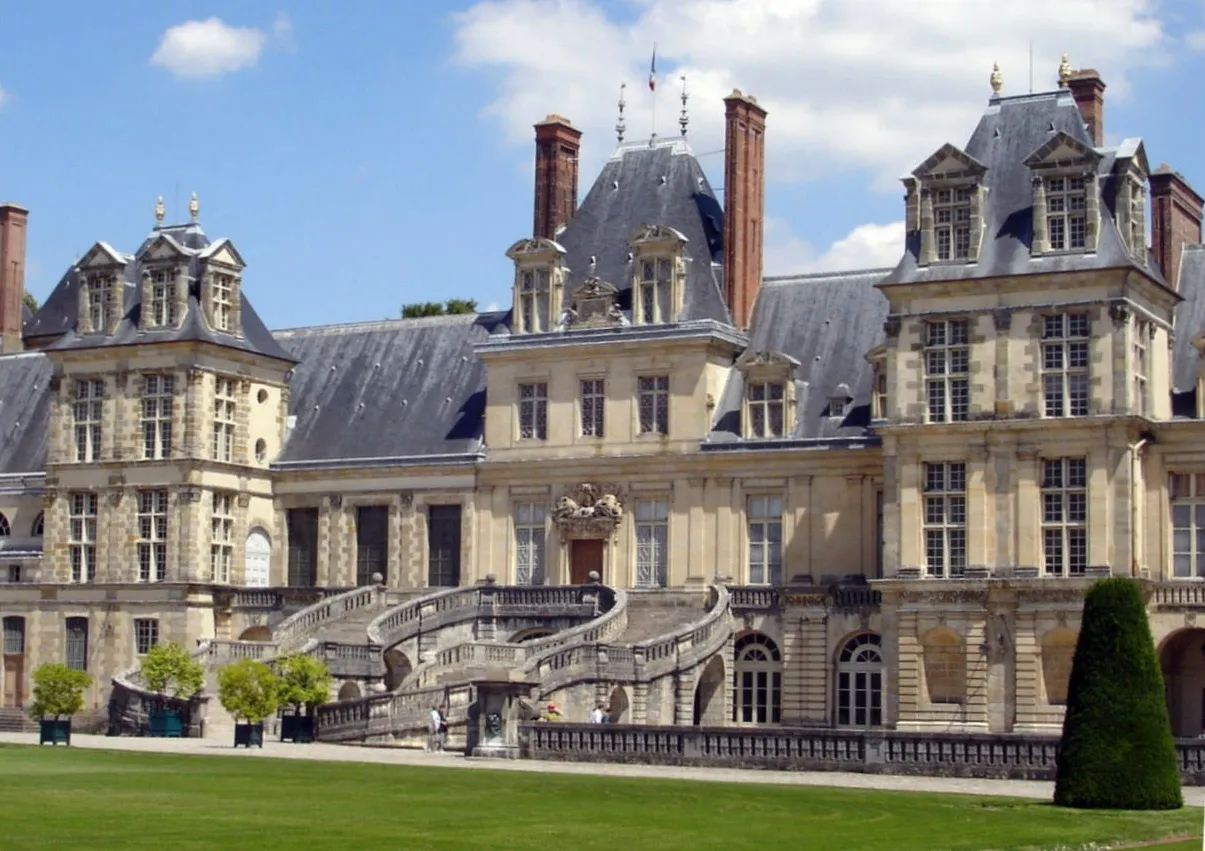
Fontainebleau is where French royal history feels tangible: a palace with 1,500 rooms that every king from François I to Napoleon used, set at the edge of a 25,000-hectare forest that still draws 15 million visitors a year. The Courtyard of the White Horse is where Napoleon said farewell to his Imperial Guard in 1814, a scene so charged it gave the courtyard a second name: the Cour des Adieux.
37+ researched places in the app
Yes. Parroo is a self-guided audio guide for Fontainebleau: 37 researched places, from Château de Fontainebleau to François I Gallery and Forêt de Fontainebleau, each with a short summary, a full article, and a roughly three-minute audio story in German, English, and French. Buy once, no subscription, no booking. Start whenever you like.
Audio sample: Château de Fontainebleau
Fontainebleau
Places researched in this city
A selection of the 37 places we've researched in this city. The full set is in the Parroo app.
- Royal palace
- Renaissance gallery
- Ancient forest
- Painters' village
- Medieval gorges
- Kinetic sculpture
-
01
Château de Fontainebleau
Every French monarch from the 12th century onward slept here, yet Napoleon's 1814 abdication and farewell to his Guard turned this thousand-room palace into a place of genuine drama. François I rebuilt it as a Renaissance showpiece in 1528, bringing Italian artists who founded the influential School of Fontainebleau.
-
02
François I Gallery
Built between 1528 and 1530 to connect the royal apartments to the Trinity Chapel, this 60-metre corridor is covered in frescoes and stucco by Rosso Fiorentino and Francesco Primaticcio, the first large-scale Mannerist decorative scheme in France. The king walked it daily, which is partly why it survived intact.
-
03
Forêt de Fontainebleau
In 1861 this forest became the world's first designated artistic reserve, after Barbizon painters lobbied to protect it from logging. Today 25,000 hectares of sandstone outcrops and oak woodland attract 15 million visitors a year and remain a major rock-climbing destination.
-
04
Courtyard of the White Horse
The courtyard takes its name from a plaster cast of the Marcus Aurelius equestrian statue installed by Catherine de Médicis, which vanished in 1626 with only a paving stone to mark the spot. Napoleon stood on its horseshoe staircase in April 1814 to address his Guard before exile, earning it the enduring nickname Cour des Adieux.
-
05
Barbizon
Between 1825 and 1875, painters including Théodore Rousseau and Jean-François Millet settled here and painted outdoors in the forest, decades before Impressionism made that approach famous. Napoleon III's 1861 decree protecting 1,097 hectares of the surrounding forest was a direct result of their advocacy.
-
06
Le Cyclop
Hidden in the woodland near Milly-la-Forêt, this 22.5-metre steel head covered in 62,000 mirror fragments took Jean Tinguely and a circle of collaborators including Niki de Saint Phalle twenty-five years to build, from 1969 to 1994. It started as a replacement for an abandoned project called the Gigantoleum, which was to include a circus and cinema.
-
07
Chapel of Saint Blaise of the Herbs
This 12th-century chapel was built as part of a leper hospital and left in disrepair for centuries until Jean Cocteau decorated its interior in 1959 with frescoes of medicinal plants, just two years before his death. He is buried here alongside his companion Jean Marais.
-
08
30 more places to discover
In the Parroo app
Good to know
37 researched places, from the Château de Fontainebleau and the François I Gallery to lesser-known spots like the Chapel of Saint Blaise of the Herbs. Each one has a short summary, a full article, and a ~3-minute audio story.
Yes. Every place has a ~3-minute audio story, written from the perspective of a guide standing next to you and produced with premium narration, not the article read aloud.
German, English, and French. Pick whichever you'd rather read or listen in.
No booking, no signup. It's a self-guided walk you start whenever you like. You do need a connection for now to stream the audio and load articles; offline support is something we're still building.
A one-time €4.99 for the whole city, no subscription and no recurring cost. You buy Fontainebleau once and keep access to all 37 places with text and audio.
Nearby cities
Open this city in Parroo
Get the full articles, audio stories, and map for this city in the Parroo app. One payment per geography. Yours to keep.
Updated: 2026-09-25