
Coverage France
Audio Guide Biarritz
app, one-time €4.99
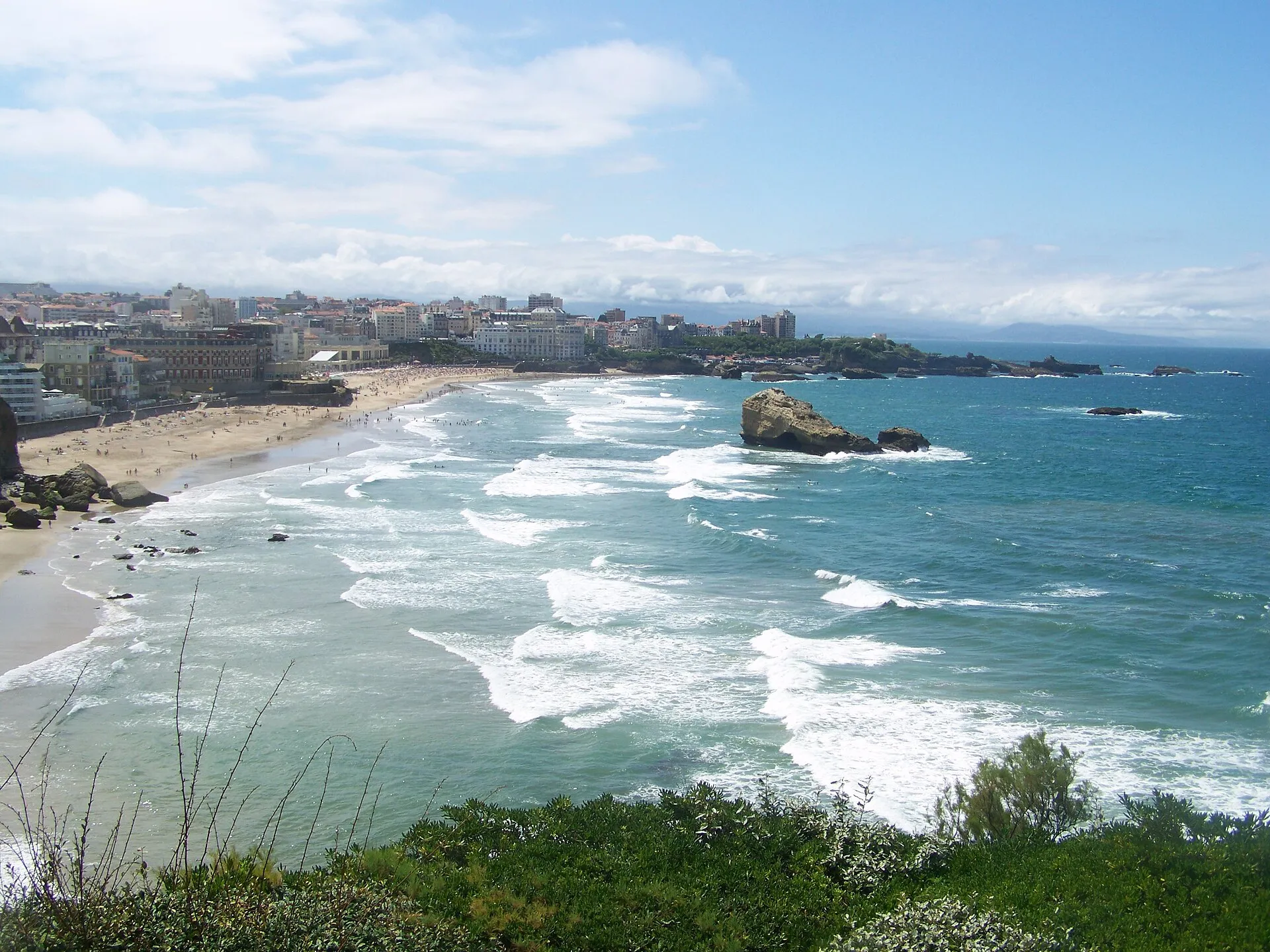
Biarritz built its identity on two things: Atlantic waves and imperial ambition. Empress Eugénie turned a Basque fishing village into a playground for European royalty in the 1850s, and the city has never looked back. From a rock where whalers once scanned the sea for whales to an Art Deco casino that hosted Édith Piaf, every corner carries a story worth knowing.
18+ researched places in the app
Yes. Parroo is a self-guided audio guide for Biarritz: 18 researched places, from Hôtel du Palais Biarritz to Rock of the Virgin and Municipal Casino, each with a short summary, a full article, and a roughly three-minute audio story in German, English, and French. Buy once, no subscription, no booking. Start whenever you like.
Audio sample: Hôtel du Palais Biarritz
Biarritz
Places researched in this city
A selection of the 18 places we've researched in this city. The full set is in the Parroo app.
- Natural coastline
- Imperial architecture
- Art Deco landmarks
- Basque heritage
- Maritime history
-
01
Hôtel du Palais Biarritz
Napoleon III built this as a private summer villa for Empress Eugénie in 1855, and it single-handedly transformed Biarritz from a fishing village into a resort for European aristocracy. After the fall of the Second Empire, Eugénie sold it and it became a hotel-casino before earning its Palace classification in 2011.
-
02
Rock of the Virgin
Long before the 1865 statue of the Virgin Mary was placed here, this rock was the spot where Basque whalers kept watch for cetaceans before launching their hunts. The legend behind the statue holds that a mysterious light guided local whalers safely home through a violent storm.
-
03
Municipal Casino
The site was first occupied by the "Bains Napoléon," a Moorish-style bathing establishment built in 1858, before the current Art Deco building by Alfred Laulhé opened in 1929. Édith Piaf performed here, and the casino's 840-square-meter terrace over the Grande Plage remains one of the most theatrical settings on the Basque coast.
-
04
Biarritz Lighthouse
Built between 1830 and 1832, this 47-metre tower was among the first lighthouses in the world to use Augustin Fresnel's optical lens, a design that advanced both maritime safety and the wave theory of light. Its two white flashes every ten seconds are still visible up to 26 nautical miles out.
-
05
Imperial Chapel of Biarritz
Empress Eugénie had this chapel built between 1864 and 1866 and dedicated it to Our Lady of Guadalupe, the Mexican Black Madonna, to commemorate the French military expedition in Mexico. The result is a startling mix of Romanesque-Byzantine and Hispano-Moorish styles, lined inside with azulejos and murals.
-
06
Villa Belza
Built between 1889 and 1895 on piles driven into the rocky coast next to a sea cave locals call the "Trou du Diable," this neo-medieval villa with its pepper-pot tower was requisitioned by the German army during World War II. It started its post-war life as a Russian restaurant catering to exiled European nobility.
-
07
Lake Mouriscot
This 23-hectare lake of Triassic origin, now protected under the Natura 2000 network, served as a seaplane base during World War I before most visitors had ever heard of it. Its steep slopes of oak, beech, and pine shelter rare species just a short distance from the beach crowds.
-
08
11 more places to discover
In the Parroo app
Good to know
18 researched places, from the Hôtel du Palais and the Rock of the Virgin to lesser-known spots like Lake Mouriscot. Each one has a short summary, a full article, and a ~3-minute audio story.
Yes. Every place has a ~3-minute audio story, written from the perspective of a guide standing next to you and produced with premium narration, not the article read aloud.
German, English, and French. Pick whichever you'd rather read or listen in.
No booking, no signup. It's a self-guided walk you start whenever you like. You do need a connection for now to stream the audio and load articles; offline support is something we're still building.
A one-time €4.99 for the whole city, no subscription and no recurring cost. You buy Biarritz once and keep access to all 18 places with text and audio.
Nearby cities
Open this city in Parroo
Get the full articles, audio stories, and map for this city in the Parroo app. One payment per geography. Yours to keep.
Updated: 2026-09-25