
Coverage France
Audio Guide Bayonne
app, one-time €4.99
Bayonne sits at the confluence of the Nive and Adour rivers, guarded by Vauban fortifications and anchored by a Gothic cathedral that doubles as a UNESCO-listed stop on the Way of Saint James. The city also holds an unexpected claim: it was the first place in France to process chocolate, thanks to Sephardic Jewish refugees who arrived in the 16th century fleeing the Spanish Inquisition.
30+ researched places in the app
Yes. Parroo is a self-guided audio guide for Bayonne: 30 researched places, from Saint Mary Cathedral of Bayonne to Citadel of Bayonne and Ramparts of Bayonne, each with a short summary, a full article, and a roughly three-minute audio story in German, English, and French. Buy once, no subscription, no booking. Start whenever you like.
Audio sample: Saint Mary Cathedral of Bayonne
Bayonne
Places researched in this city
A selection of the 30 places we've researched in this city. The full set is in the Parroo app.
- Gothic cathedral
- Vauban fortifications
- Fine arts museum
- Covered market
- Medieval castles
- Basque culture
-
01
Saint Mary Cathedral of Bayonne
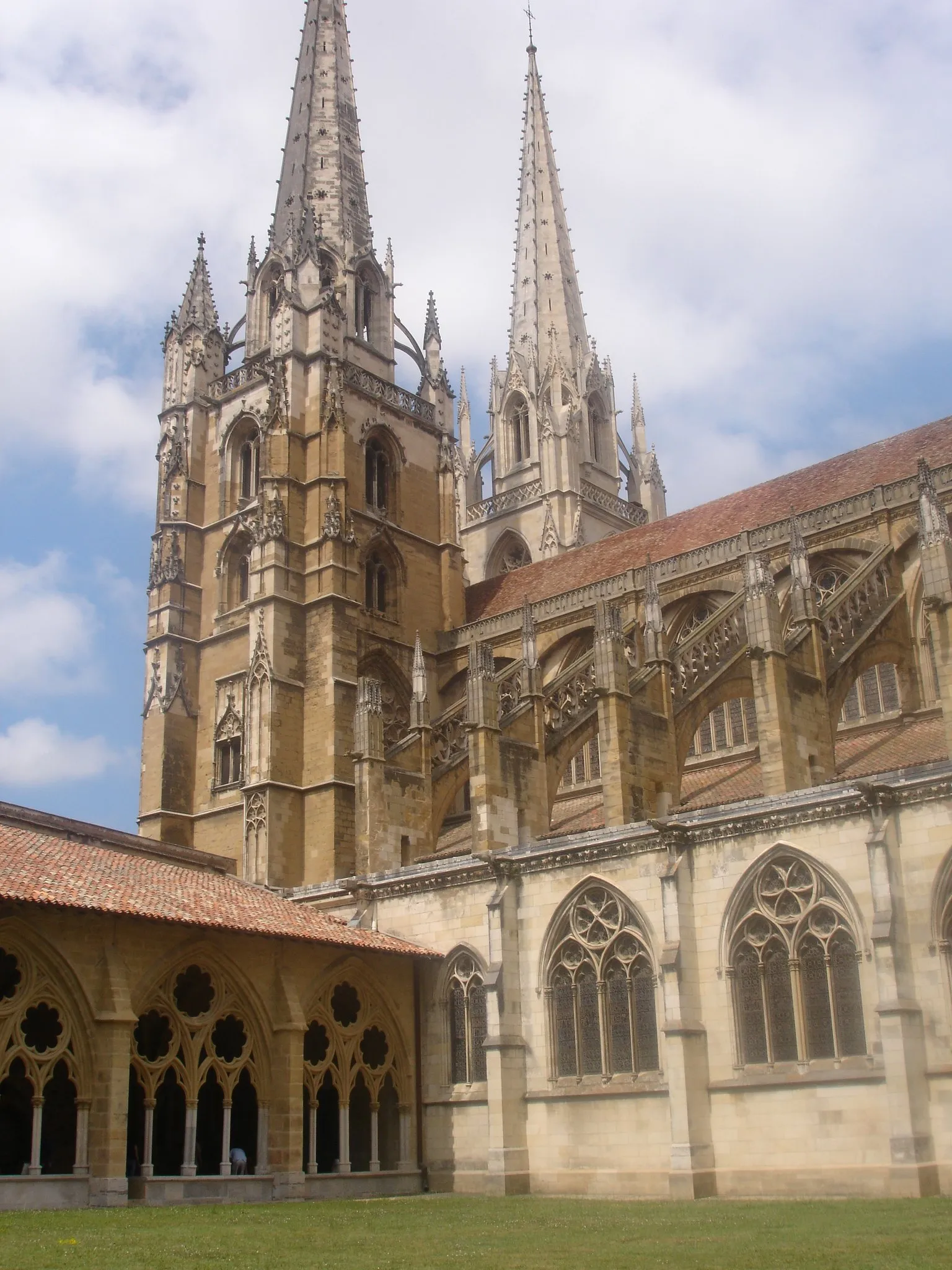
Built on the site of a Roman temple dedicated to Mars, this UNESCO-listed Gothic cathedral took three centuries to complete and its 85-metre twin spires still define Bayonne's skyline. It is also a key waypoint on the pilgrimage routes to Santiago de Compostela.
-
02
Citadel of Bayonne
Vauban designed this square fortress for Louis XIV between 1680 and 1686, positioning it on a hill to control access to the Adour River. It played a direct role in the Napoleonic Wars and today remains an active military base, opened to the public only on special heritage days.
-
03
Ramparts of Bayonne
Fifteen centuries of defensive building are stacked into these walls, from a 4th-century Roman castrum through medieval expansions to Vauban's 17th-century bastions and 19th-century drawbridges. Nowhere else in France has the full bastioned system survived so intact.
-
04
Bonnat-Helleu Museum
A Bayonne-born painter named Léon Bonnat bequeathed around 2,500 works in 1922 and quietly turned his hometown into the keeper of Old Master drawings by da Vinci and Rembrandt. The museum, nicknamed the "Little Louvre of Bayonne," reopened in 2025 after a 35-million-euro renovation.
-
05
Bayonne Arena
Bullfighting in Bayonne has been documented since 1289, making it one of the oldest traditions of its kind in France, and the first corrida on the future Place de la Liberté was staged in 1701 to welcome the future king of Spain. The current neo-Moorish arena, funded by banker Albin Salzedo and inaugurated in 1893, seats over 10,000 people.
-
06
Chocolate Museum
Bayonne's 400-year chocolate tradition began when Sephardic Jews fleeing the Inquisition settled in the Saint-Esprit district and introduced cocoa processing to France; by 1854 the city had 32 chocolate manufacturers. The museum, opened in 2006 inside a working chocolate workshop, lets visitors watch production and traces exactly how that history unfolded.
-
07
Museum of Judaism & the Synagogue
The Saint-Esprit district earned the nickname "Little Jerusalem" after Spanish and Portuguese Jews expelled during the Inquisition made it their home in the 16th century, with the main street historically known as "rue la Juiverie." The neoclassical synagogue they built in 1837 still stands at 35 rue Maubec, and the adjacent museum opened in 2022 to tell that story in full.
-
08
23 more places to discover
In the Parroo app
Good to know
30 researched places, from the Saint Mary Cathedral and the Vauban Citadel to lesser-known spots like the Museum of Judaism & the Synagogue. Each one has a short summary, a full article, and a ~3-minute audio story.
Yes. Every place has a ~3-minute audio story, written from the perspective of a guide standing next to you and produced with premium narration, not the article read aloud.
German, English, and French. Pick whichever you'd rather read or listen in.
No booking, no signup. It's a self-guided walk you start whenever you like. You do need a connection for now to stream the audio and load articles; offline support is something we're still building.
A one-time €4.99 for the whole city, no subscription and no recurring cost. You buy Bayonne once and keep access to all 30 places with text and audio.
Nearby cities
Open this city in Parroo
Get the full articles, audio stories, and map for this city in the Parroo app. One payment per geography. Yours to keep.
Updated: 2026-09-25