
Coverage France
Audio Guide Ajaccio
app, one-time €4.99
Ajaccio is Napoleon Bonaparte's birthplace, and the Corsican capital wears that fact on every street corner, from palatial museums to the Gulf's glittering waterfront. But beneath the Napoleonic legend lies a city shaped by Genoese fortifications, Greek refugees, and some of the finest Italian paintings outside Paris. The combination makes it one of the Mediterranean's more layered stops.
25+ researched places in the app
Yes. Parroo is a self-guided audio guide for Ajaccio: 25 researched places, from National Museum of the Bonaparte House to Fesch Palace and Cathedral of Our Lady of the Assumption, each with a short summary, a full article, and a roughly three-minute audio story in German, English, and French. Buy once, no subscription, no booking. Start whenever you like.
Audio sample: National Museum of the Bonaparte House
Ajaccio
Places researched in this city
A selection of the 25 places we've researched in this city. The full set is in the Parroo app.
- Baroque cathedral
- Genoese citadel
- Napoleonic monuments
- Fine-arts palace
- Coastal nature
- Prehistoric site
-
01
National Museum of the Bonaparte House
English troops used this house as a forage store and arms depot from 1794 to 1796, just decades after Napoleon was born here on 15 August 1769. Today it is a national museum filled with Bonaparte family furniture and memorabilia.
-
02
Fesch Palace
Napoleon's maternal uncle, Cardinal Joseph Fesch, assembled a collection so vast that the Palais Fesch now holds France's largest collection of Italian paintings after the Louvre. The attached Imperial Chapel serves as the Bonaparte family tomb.
-
03
Cathedral of Our Lady of the Assumption
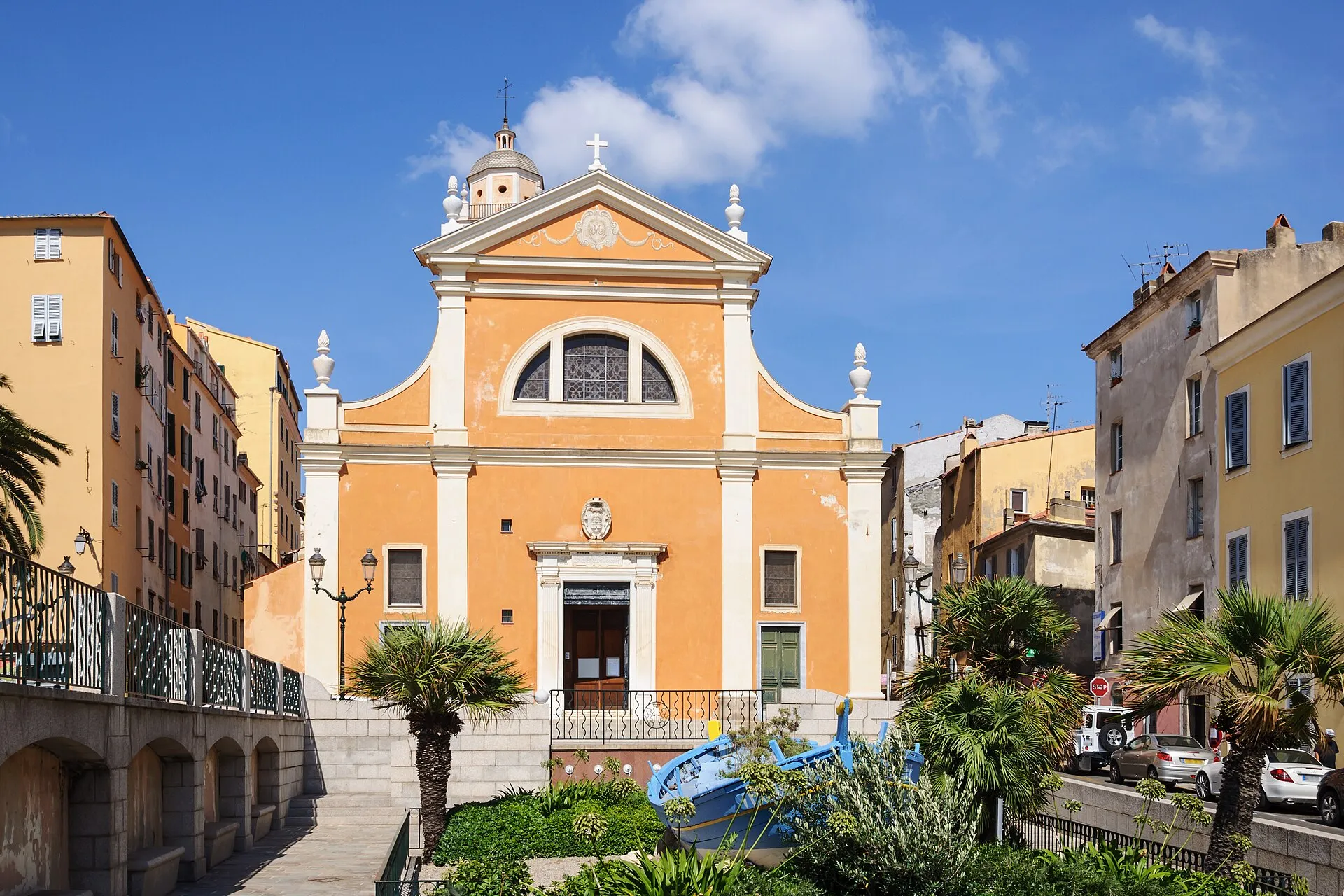
Napoleon was baptised here in 1771, two years after his birth, in a cathedral completed in 1593 and still anchored by a high altar donated by his sister Élisa Bonaparte. The ochre Baroque façade has watched over Ajaccio's old town for more than four centuries.
-
04
Place du Général de Gaulle: Napoleon and His Brothers
The bronze equestrian statue of Napoleon here was cast from Austrian cannons captured in battle, a detail that makes the monument's imperial posturing feel oddly literal. Designed by Eugène Viollet-le-Duc, it was inaugurated in 1865 under Napoleon III.
-
05
Tour de la Parata
Built between 1550 and 1551 to repel Barbary pirate raids, this 12-metre granite tower stands at the edge of the Parata Peninsula with the Sanguinaires Islands as its backdrop. Its walls are 2 metres thick, which tells you something about the threat level at the time.
-
06
Filitosa Prehistoric Site
The warrior-faced statue-menhirs at Filitosa, some standing up to 3 metres tall, were carved in the 2nd millennium BCE and represent a sculptural tradition found nowhere else in the Mediterranean. The site was only discovered in 1946 when a farmer noticed the stones on his land.
-
07
Chapel of the Greeks
This quiet 17th-century chapel became a sanctuary for Greek settlers from Paomia who fled to Ajaccio after being expelled by Corsican shepherds in 1731, a footnote of displacement that most visitors walk straight past. Inside, ex-voto offerings left by coral fishermen add another unexpected layer to its story.
-
08
18 more places to discover
In the Parroo app
Good to know
25 researched places, from the Bonaparte House and Fesch Palace to lesser-known spots like the Chapel of the Greeks. Each one has a short summary, a full article, and a ~3-minute audio story.
Yes. Every place has a ~3-minute audio story, written from the perspective of a guide standing next to you and produced with premium narration, not the article read aloud.
German, English, and French. Pick whichever you'd rather read or listen in.
No booking, no signup. It's a self-guided walk you start whenever you like. You do need a connection for now to stream the audio and load articles; offline support is something we're still building.
A one-time €4.99 for the whole city, no subscription and no recurring cost. You buy Ajaccio once and keep access to all 25 places with text and audio.
Nearby cities
Open this city in Parroo
Get the full articles, audio stories, and map for this city in the Parroo app. One payment per geography. Yours to keep.
Updated: 2026-09-25