
Coverage France
Audio Guide Le Mans
app, one-time €4.99
Le Mans is a city where a 1,700-year-old Roman wall runs alongside streets that fill with racing engines every June. The Plantagenet dynasty was born here, the 24 Hours race put it on the global map, and the medieval old city stands almost intact behind that ancient wall.
30+ researched places in the app
Yes. Parroo is a self-guided audio guide for Le Mans: 30 researched places, from Saint-Julien Cathedral of Le Mans to Gallo-Roman Wall of Le Mans and 24 Hours of Le Mans Circuit, each with a short summary, a full article, and a roughly three-minute audio story in German, English, and French. Buy once, no subscription, no booking. Start whenever you like.
Audio sample: Saint-Julien Cathedral of Le Mans
Le Mans
Places researched in this city
A selection of the 30 places we've researched in this city. The full set is in the Parroo app.
- Gothic cathedral
- Roman walls
- Racing circuit
- Medieval quarter
- Cistercian abbey
- Museums
-
01
Saint-Julien Cathedral of Le Mans
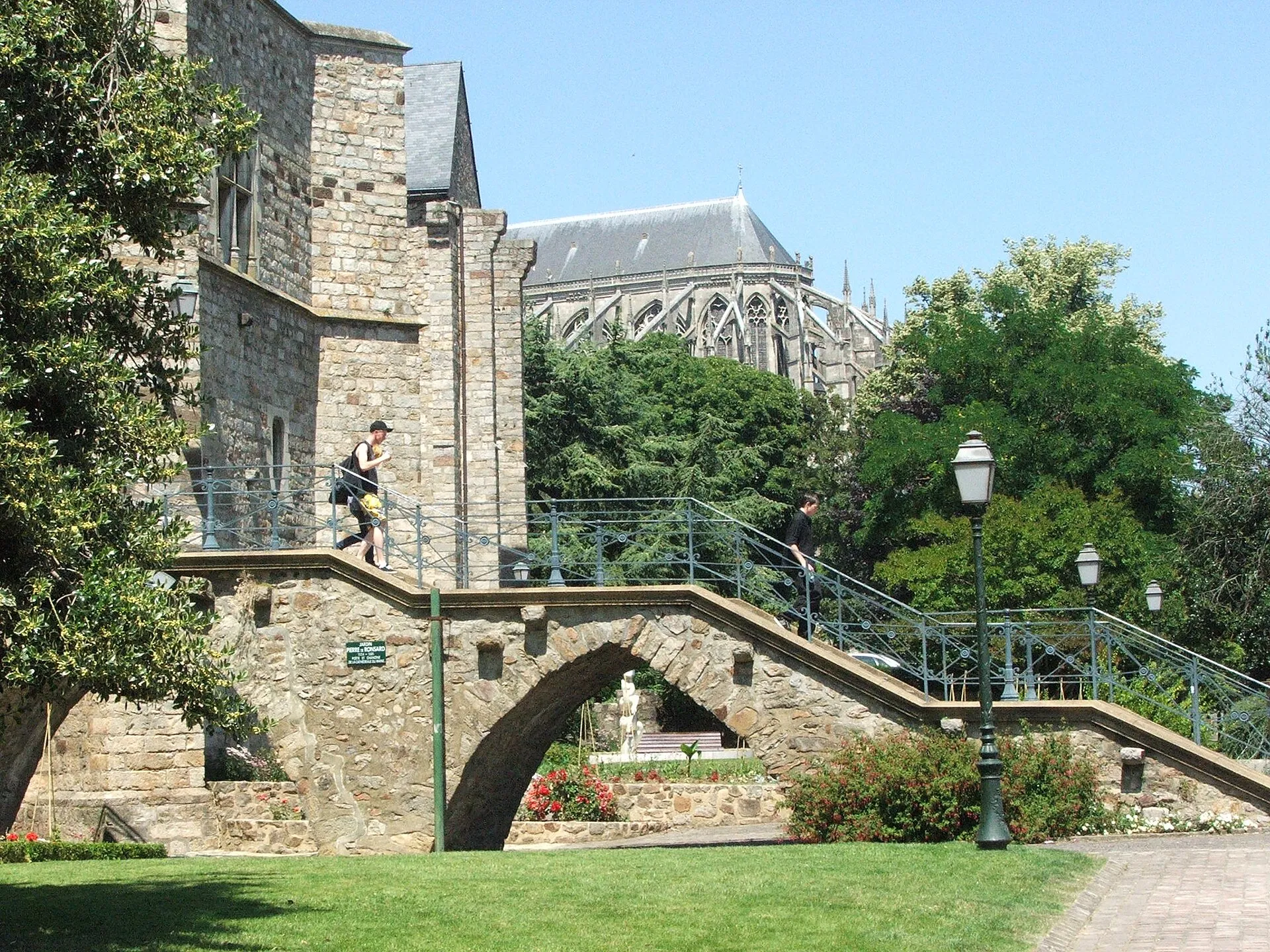
Geoffrey Plantagenet married Matilda here in 1128, setting in motion a dynasty that would rule England for three centuries. Built between the 11th and 15th centuries, the cathedral stretches 134 metres and its Gothic choir soars to 34 metres, filled with some of the oldest stained glass in France.
-
02
Gallo-Roman Wall of Le Mans
Built between 320 and 360 AD in striped bands of red brick, white limestone, and roussard stone, this 1,300-metre wall is considered one of the best-preserved Roman enclosures anywhere in the former empire, alongside those of Rome and Constantinople. Those vivid colours gave Le Mans its nickname: the Red City.
-
03
24 Hours of Le Mans Circuit
The first race here ran on 26 May 1923, with the winners covering 2,209 kilometres in a single day and night. The circuit still combines public roads and dedicated racing sections, stretching 13.6 kilometres around a track that has shaped automotive engineering for over a century.
-
04
Plantagenet City
Twenty hectares of cobblestone streets and half-timbered houses enclosed by a Gallo-Roman wall that is over a kilometre long. Henry II of England was born inside these walls in 1133, and the neighbourhood still looks much as it did when his family ruled it.
-
05
Royal Abbey of Épau
Berengaria of Navarre, widow of Richard the Lionheart, founded this Cistercian abbey in 1230 and is buried inside it. After being set on fire by locals during the Hundred Years War to stop enemy occupation, it was rebuilt and still stands on the banks of the Huisne, hosting a classical music festival each year.
-
06
House of Queen Bérengère
The name is a myth: Bérengère of Navarre never set foot in this late-15th-century timber-framed house, which was actually built by a salt merchant named Jean Véron. The mix-up likely started as local legend, but the intricate carved facade is real enough to have earned it listed monument status since 1881.
-
07
Chapel of the Visitation
One of the rarest examples of Regency-style architecture in western France, this domed chapel was built between 1723 and 1737 for a convent of Visitandine nuns. Within sixty years of its consecration, the French Revolution turned it into a prison and courthouse.
-
08
23 more places to discover
In the Parroo app
Good to know
30 researched places, from the Saint-Julien Cathedral and the Gallo-Roman Wall to lesser-known spots like the House of Queen Bérengère. Each one has a short summary, a full article, and a ~3-minute audio story.
Yes. Every place has a ~3-minute audio story, written from the perspective of a guide standing next to you and produced with premium narration, not the article read aloud.
German, English, and French. Pick whichever you'd rather read or listen in.
No booking, no signup. It's a self-guided walk you start whenever you like. You do need a connection for now to stream the audio and load articles; offline support is something we're still building.
A one-time €4.99 for the whole city, no subscription and no recurring cost. You buy Le Mans once and keep access to all 30 places with text and audio.
Open this city in Parroo
Get the full articles, audio stories, and map for this city in the Parroo app. One payment per geography. Yours to keep.
Updated: 2026-09-25